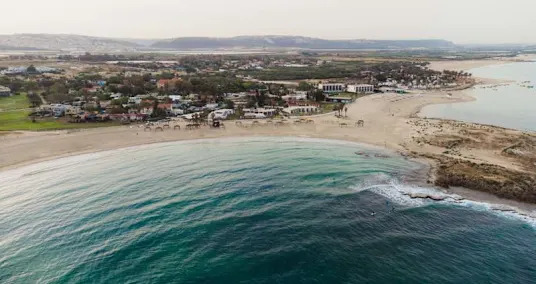
The discovery was made in an ancient shipwreck in the Dor Lagoon near the Carmel Coast, where archaeologists recovered nine pieces of unprocessed iron known as “blooms.”
Researchers from the University of Haifa said Wednesday that an underwater excavation off Israel’s northern Mediterranean coast uncovered what they described as the earliest known cargo of raw iron transported by ship, dating back around 2,600 years, Xinhua reported.
The discovery was made in an ancient shipwreck in the Dor Lagoon near the Carmel Coast, where archaeologists recovered nine pieces of unprocessed iron known as “blooms.” According to the university, the find provides direct evidence of how iron was transported in its earliest commercial stages.
The material was preserved in its original form, having solidified directly in a smelting furnace without undergoing forging or further refinement. Researchers said this distinguishes the cargo from later iron artifacts that typically show signs of shaping or tool-making.
Unlike copper and bronze, which could be melted into liquid form in ancient production processes, iron was heated with charcoal to produce a solid, porous mass. That mass was generally hammered to remove impurities and create denser material suitable for tools and implements.
The recovered blooms showed no indication of that secondary processing stage, suggesting they were transported immediately after production.

Earliest iron shipment discovered in ancient Mediterranean wreck
To determine the age and condition of the cargo, researchers conducted microscopic and chemical analyses.
Radiocarbon dating was also carried out on charred wood embedded in one of the pieces, helping confirm the timeline of the shipment. The findings were published in the journal Heritage Science.
Researchers said the cargo indicates that iron was being moved in raw form from production sites to other locations for further processing, pointing to a level of specialization in ancient manufacturing and trade networks in the Mediterranean.
The University of Haifa said the discovery provides new insight into early iron production and distribution practices in the region.
LATEST POSTS
- 1
 Advocacy groups react after Mattel introduces 1st Barbie doll with autism
 - 2Flat Earth, spirits and conspiracy theories – experience can shape even extraordinary beliefs
- 3Global measles cases drop 71% in 24 years as vaccination coverage improves, WHO says
- 4Russia earning billions from Hormuz blockade, German trade body says
- 5Full SNAP benefits must be paid ‘promptly,’ USDA tells states as government reopens




- Why don’t humans have hair all over their bodies? A biologist explains our lack of fur
- Best Food Truck Cooking: Decision in favor of Your Number one!
- Surging measles cases are 'fire alarm' warning that other diseases could be next
- ‘Slender Man’ attacker back in custody. What we know about Morgan Geyser's disappearance and what happens next.
- New trailer for 'Bridgerton' Season 4 teases Benedict's love story: Watch it here
- RFK Jr. releases new dietary guidelines with emphasis on protein, full-fat dairy
- Vote in favor of Your #1 Home Exercise Gear: Execution and Comfort Matter
- A red meat allergy from tick bites is spreading – and the lone star tick isn’t the only alpha-gal carrier to worry about
- Vote In favor of Your Favored Web based Dating Application


