When you buy through links on our articles, Future and its syndication partners may earn a commission.

Saturn's huge moon Titan may not hide an ocean under its frozen surface but rather widespread pockets of liquid water, a new study finds.
Titan is the largest of the 274 known moons orbiting Saturn. In fact, Titan is bigger than the planet Mercury.
"I love Titan — I think it's one of the most interesting worlds in the solar system," study lead author Flavio Petricca, a planetary scientist at NASA's Jet Propulsion Laboratory in Southern California, told Space.com. "It's the only moon in our solar system with an atmosphere, and it's the only body with liquid on its surface other than Earth."
Scientists have long suspected that seas might also lurk under Titan's icy shell. For instance, the way Titan flexes under Saturn's gravity suggests that the moon is home to a vast underground ocean.
In the new study, Petricca and his colleagues wanted to reexamine Titan using new, improved methods to analyze radio tracking data. These new techniques greatly reduced uncertainties regarding data gathered by NASA's Cassini mission of Titan's interior.
Unexpectedly, the scientists discovered that Titan's interior is resisting distortion from Saturn's gravitational pull to a much greater degree than previously thought. This suggests Titan likely does not have a hidden ocean, but instead a layer of ice close to its melting point that is kept from liquefying by high pressure. This slushy icy likely hosts pockets of liquid water, the researchers added.

Titan may once have had an underground ocean near the beginning of its history, Petricca said. There may not have been enough heat from radioactive elements in its core to keep this ocean from freezing, he noted. "It may be going through a phase again where heating is increasing again," Petricca added.
All in all, ocean worlds may be less common than recently thought, the scientists noted. "We're not certain if having widespread liquid pockets instead of a global ocean makes Titan more or less habitable," Petricca said. "It will be interesting to find out."
NASA's upcoming Dragonfly mission to Titan can help scan the moon to better understand its geology. "We'll better understand the conditions for habitability there," Petricca said.
The scientists detailed their findings online Dec. 17 in the journal Nature.
LATEST POSTS
- 1
 A few Up-to-date Sacks - Stylish Young ladies Shouldn't Miss
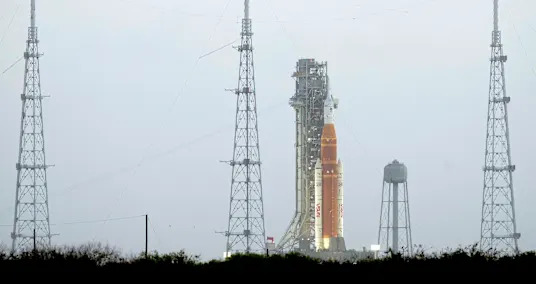
 - 2NASA begins fueling rocket to launch astronauts on the first lunar trip in half a century
- 3Best Pizza Beating: What's Your #1?
- 4German Easter peace marches draw tens of thousands
- 5Surging measles cases are 'fire alarm' warning that other diseases could be next




- 7 Well known Vacation spots In The US
- Most loved Amusement Park for Small children: Which One Do You Suggest?
- MacArthur Foundation awards $100M to outbreak surveillance network, a boost amid global health cuts
- 6 Trail blazing Bicycles for Rough terrain Undertakings
- Al-Sharaa denies he called for 80% of Syrians to return from Germany
- Investigation reveals sperm donor passed on cancer risk to dozens of children across Europe
- The 10 Most Significant Virtual Entertainment Missions
- Police arrest 18 as anti-war protests spread across Tel Aviv, Haifa, Jerusalem
- A volcanic eruption may have catalyzed the plague's arrival in Europe, study suggests